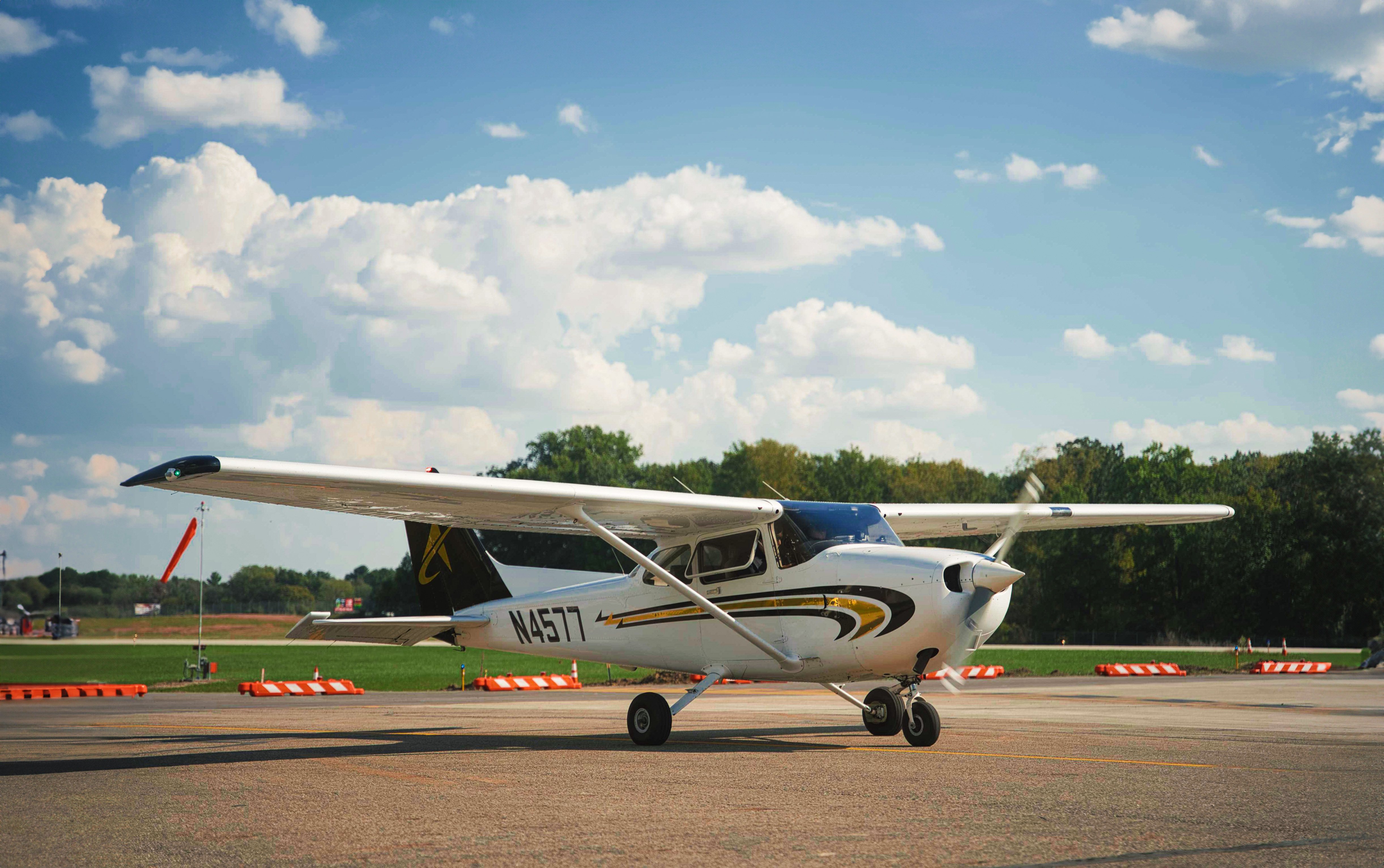
Becoming a pilot in Indiana follows the same FAA ladder as anywhere in America — but Indiana gives you three quiet advantages: honest weather that builds real skill, uncrowded airspace that stretches every training dollar, and costs well below the coasts. Here is the full path, step by step.
I. Meet the basic requirements.
Before any flight training, you need four things: be at least 17 for a private certificate (18 for commercial), read and speak English, hold a valid government ID, and pass an FAA medical exam. The medical is a routine physical with an Aviation Medical Examiner — there are AMEs in South Bend, Warsaw, and Fort Wayne, and most aspiring pilots pass without issue. Get the medical first. It is the cheapest step, and it tells you immediately whether anything stands between you and a career in the cockpit.
II. Earn the private pilot certificate.
The private certificate (PPL) is your entry ticket: a minimum of 40 flight hours — most students take 55–70 — covering maneuvers, navigation, radio work, and solo flight. Nationally it costs $12,000–$18,000 and takes two to four months of consistent flying.
AlphaFlight Academy is a career academy: our programs begin after the private certificate. If you are starting from zero, earn your PPL at a school near you, then bring it to Plymouth — we will take you the rest of the way. If you are unsure how to pick that first school, read our guide on choosing a flight school and the red flags to avoid.
III. Add the instrument rating.
The instrument rating teaches you to fly by reference to instruments alone — in cloud, in haze, at night over dark farmland. It is the single biggest safety upgrade in aviation and a hard requirement for every professional cockpit. Expect 40+ hours of instrument training over three to five months.
This is where training in Indiana stops being a compromise and becomes an advantage. Arizona students log "instrument" time under blue skies wearing a view-limiting hood. Indiana students fly actual instrument conditions — real ceilings, real approaches to minimums. Our instrument rating program at Plymouth Municipal (C65) is built around that weather, with Garmin glass cockpits and a simulator for rehearsing every approach before you fly it. We wrote more about the philosophy in why training in bad weather makes better pilots.
IV. Earn the commercial certificate.
The commercial pilot license (CPL) is the certificate that lets you be paid to fly. It requires 250 total hours, tighter tolerances on every maneuver, plus cross-country, night, and complex-aircraft experience. From private to commercial typically takes 8–14 months and — industry-wide — $40,000–$70,000 all-in from zero, which is why choosing an efficient program matters more than choosing a cheap one. Our commercial pilot program covers the full path, including multi-engine time in a Piper Seneca, and VA / GI Bill benefits are accepted. For the honest numbers, see what a commercial pilot license actually costs.
V. Become a CFI — and get paid to build hours.
Airlines require 1,500 hours. A commercial certificate alone gets you to roughly 250. The bridge, for nearly every airline pilot flying today, is the certified flight instructor certificate: teach, get paid, and log hours that count. Our CFI program teaches instruction as a craft — because how you learn to teach determines what kind of aviator you become.
VI. Why train in Indiana at all?
- Real weather, real skill. Four seasons of ceilings, crosswinds, and honest IMC produce pilots who have seen weather, not just read about it.
- Quiet airspace. At an uncrowded field like Plymouth Municipal (C65), you spend your paid hour flying maneuvers — not idling in a run-up queue behind nine other trainers.
- Lower costs. Aircraft rental, instruction, and living costs in Indiana run well below coastal metros — the same FAA certificate for thousands less.
- Within reach. Plymouth is about 30 minutes from South Bend and Mishawaka, under an hour from Warsaw, Rochester, and Valparaiso, and two hours from Indianapolis and Chicago.
The timeline, end to end.
Flying full-time (3–5 days per week): private certificate in 2–4 months, instrument rating in 3–5, commercial in 8–14, CFI shortly after. A dedicated student can go from first lesson to paid flying job in under two years. Part-time students should roughly double those figures — and know that consistency, not talent, is what separates those who finish from the eighty percent who quit.
Indiana does not give you postcard weather. It gives you the kind that builds aviators.
When you hold your private certificate and you are ready for the career path — the instrument rating, the commercial license, the CFI — come see us. Visit Plymouth Municipal, meet the instructor who will take you through every rating, and walk the ramp. No cost, no pressure. That is how every AlphaFlight journey starts.