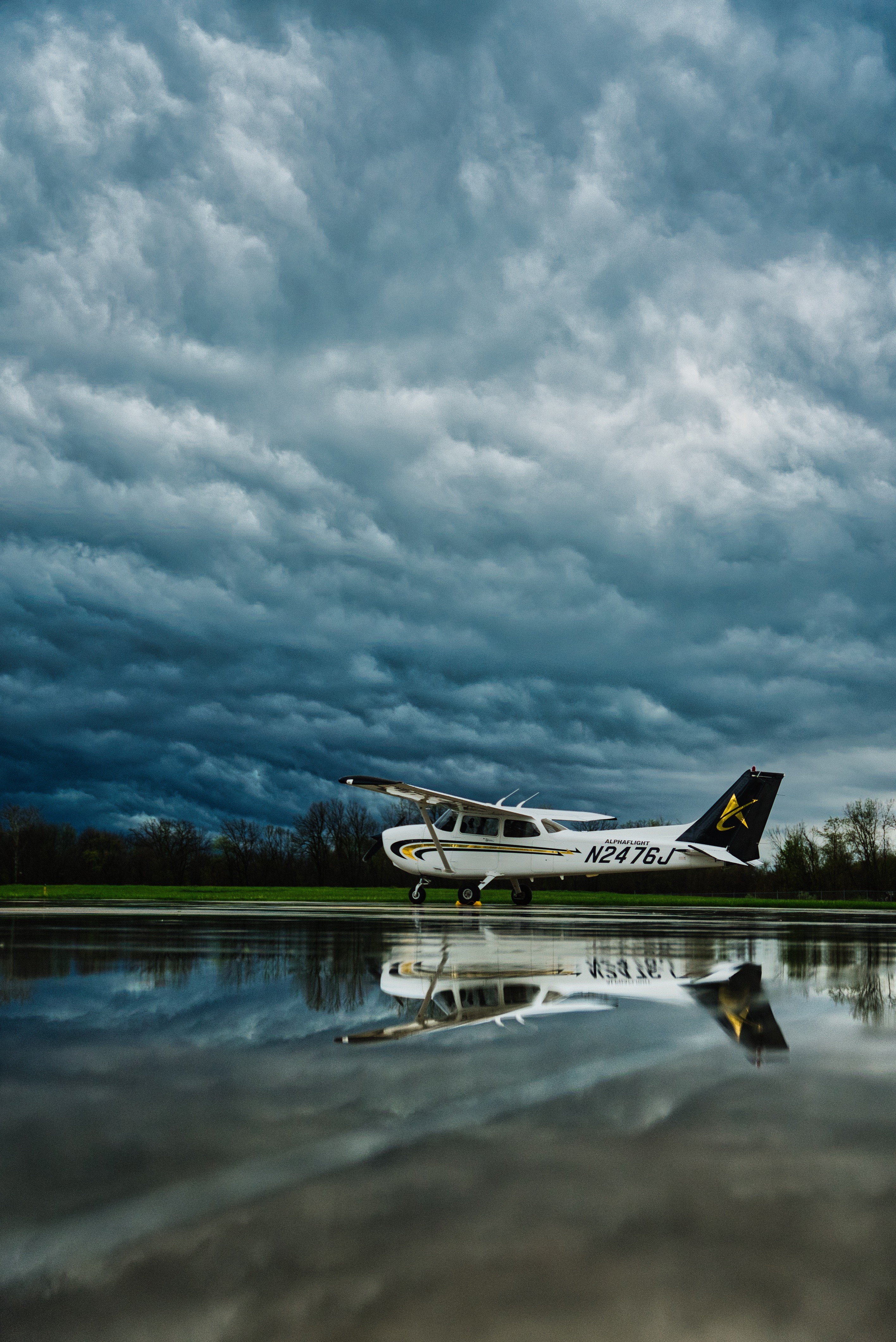
Flight schools in Arizona and Florida market three hundred sunny days a year as a selling point. And sure — consistent weather means consistent scheduling. But there is a problem: when those students encounter real weather for the first time in their careers, they freeze.
Fair-weather training produces fair-weather pilots.
If you have only ever flown in clear skies, your first encounter with a crosswind, low ceilings, or reduced visibility will feel dangerous — even if it is perfectly manageable. The stress of the unknown kills decision-making.
At Alpha Flight Academy in Indiana, we train in the full spectrum of Midwest weather. Our students develop calm, confident decision-making skills that fair-weather pilots simply do not have.
What real-weather training looks like.
We do not send students into dangerous conditions. But we do deliberately train in:
- Crosswinds — 10–20 knot crosswind landings become routine, not terrifying
- Low ceilings — learning to read weather, make go/no-go decisions, and divert
- Turbulence — understanding what is normal versus what requires action
- Winter flying — cold weather operations, frost and ice awareness, density altitude
- Summer convective weather — reading radar, avoiding thunderstorms
The result.
When our students fly in perfect conditions — and they will, regularly — it feels easy. Like a cheat code. That is because their baseline is real-world weather, not a blue-sky simulation.
Airlines know this. Employers know this. The pilots who trained in diverse conditions are the ones who perform under pressure.
A pilot who has only flown in good weather has not yet flown.